
The recent launch of H&M’s Conscious
collection is the latest in a series of high street brands putting social and
environmental responsibility at the core of their campaigns. For example, last
year we saw Marks & Spencer and Puma launch Shwopping and Bring Me Back initiatives
that encouraged consumers to recycle their used clothing rather than send it to
the landfill. A personal favorite of mine is the Diesel+Edun Spring 2013
collaboration, which focuses on developing sustainable trade relationships with
Africa. If ethical fashion ever was the remit of hippies and frumpy housewives,
that era is clearly over.

There is a good business case for CEOs to
turn their heads in this direction. In 2009 The Carbon Trust estimated that
large UK businesses could save £1.6bn a year by improving the efficiency of
their supply chains. Clearly, it pays to be nice to the environment – and in
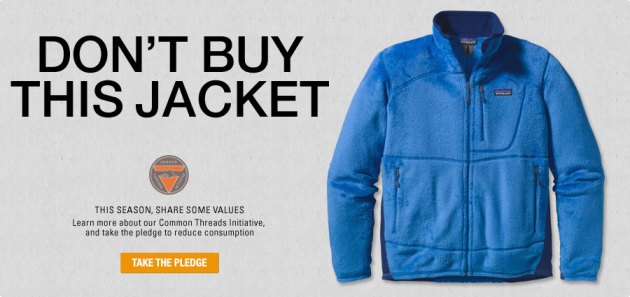
more ways than one. Outdoor clothing brand Patagonia recently ran a campaign asking
consumers NOT to buy their products due to their environmental impact. To
illustrate the point, Patagonia even outlined how much waste the product
produces in each stage of the supply chain through their Footprint Chronicles site. Despite economic downturn, Patagonia’s sales hit an all-time record. In the words of their Director of Environmental Strategy, Jill Dumain, “If I wanted to make the most money possible, I would invest in environmentally responsible supply chains … these are the best years in our company’s history.”
Patagonia’s transparency reinforces
customers’ trust in its brand; it illustrates that their actions abide by the
values the company was built on. The case is quite different with a brand like
H&M, which has historically been more associated with sweatshops than CSR.
On top of that, while Patagonia markets its premium products based on brand
values, H&M’s customers tend to be driven more by the low prices of its
fashion goods than the ideals that sit behind them. And yet H&M is clearly
putting social and environmental responsibility at the forefront of their
marketing efforts by sponsoring ethical fashion forums, claiming the title of the world’s largest organic cotton buyer and offering vouchers in return for recycled clothing from any brands.
Not everyone is convinced though. Clean
Clothes Campaign (a Netherlands-based group dedicated to improving the lives of
garment industry workers) launched a spoof Unconscious campaign to highlight
the fact that the workers who made the ‘Conscious’ clothes are chronically
overworked and undernourished. In Cambodia alone, more than 2900 workers have collapsed since 2010, several hundred of them at H&M suppliers.

The H&M website proudly lists its
achievements in improving supply chain transparency and workers’ livelihoods,
such as the recent publishing of all its factories and H&M’s role in
negotiating higher wages for Cambodian workers. Yet it does not tell us that
this came after a scandalous 2-day hunger strike at the Kingsland factory in Phnom Penhm, where women were paid $60 a month to produce underwear for H&M
and Walmart. The minimum wage in the country is $75, although according to the Asia Floor Wage Alliance a worker and her family need a monthly income of $274 to cover basic needs. And it wasn’t even this appalling pay that caused the
strike, but the fact that the factory closed and its owner had fled without
paying the workers the wages they were owed.
Whatever the backstory, it is clear that
H&M know they need to be addressing these issues. Ultimately it is they who
are responsible for ensuring that supply chains stand up to ethical scrutiny.
Such problems cannot be resolved overnight and we can see their steps in the
right direction, so it’s not entirely fair to see them as hypocritical the way
the Unconscious Campaign does. And yet, we need the likes Clean Clothes
Campaign to keep tabs on the likes of H&M to ensure that this
transformation – which they claim to be putting at the forefront of their
agenda – is indeed underway. Shaming big brands might annoy the C-suite and
embarrass their advertising execs, but this pressure is a productive one. It
acts as the conscience to some of the most powerful organizations in the world,
and helps change it for the better.

